General Outline of Tibetan Buddhism (3)
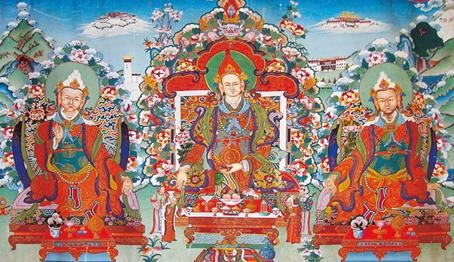
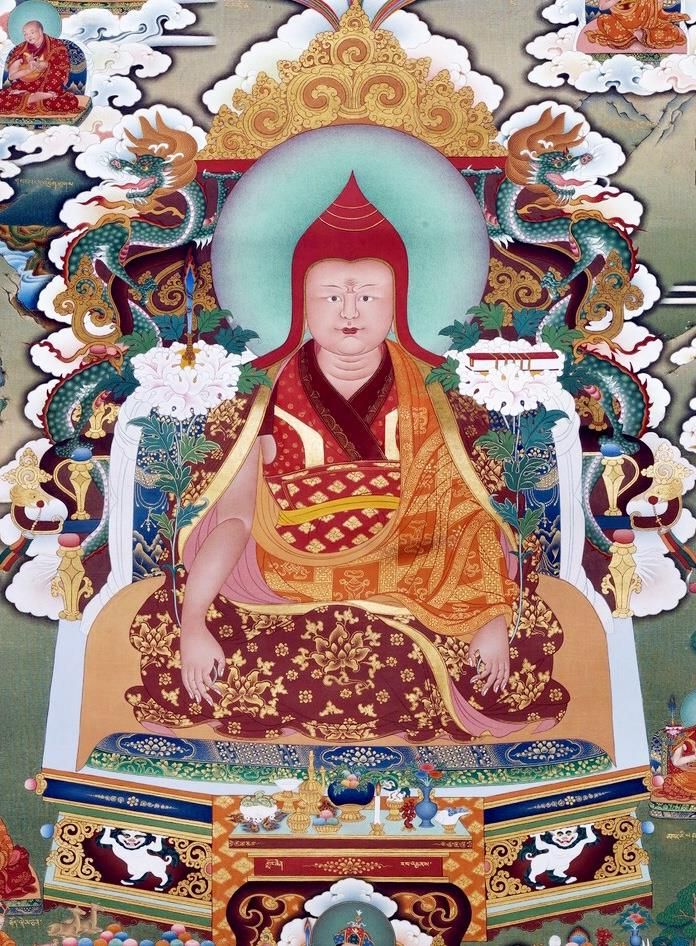
☸️ Trisong Detsen (Tibetan: ཁྲི་སྲོང་ལྡེ་བཙན, Wylie: Khri-sRong lDe-bTsan, THL: Trisong Detsen, 742-797 CE), was the 37th Tsenpo of the Tibetan Empire, reigning from 755 to 797 CE. During his reign, Tibet reached its peak of power. He was also a crucial patron of Tibetan Buddhism and was later revered as one of the 'Three Dharma Kings'.

Born to the handsome-bearded Mei Zengong and Princess Jincheng, he ascended to the throne at a young age in 755 CE. Initially, ministers like Nanan prohibited Buddhism. Upon reaching maturity, he issued edicts promoting Buddhism, invited Bodhisattva and Padmasambhava to Tibet, and built Samye Monastery. He welcomed Buddhist scholars from India and Nepal, cultivated translators, and oversaw extensive Buddhist text translations. He ordained the first seven Tibetan monks, known as the 'Seven Examined Men', establishing the first monastic order. Buddhism flourished under his reign. He engaged in military conflicts with the Arabs, Bengal, and the Tang dynasty, but in his later years focused on Sino-Tibetan peace. In 783 CE, during Emperor Dezong's reign, a Sino-Tibetan alliance was formed at Qingshui County. He passed away in 797 CE.
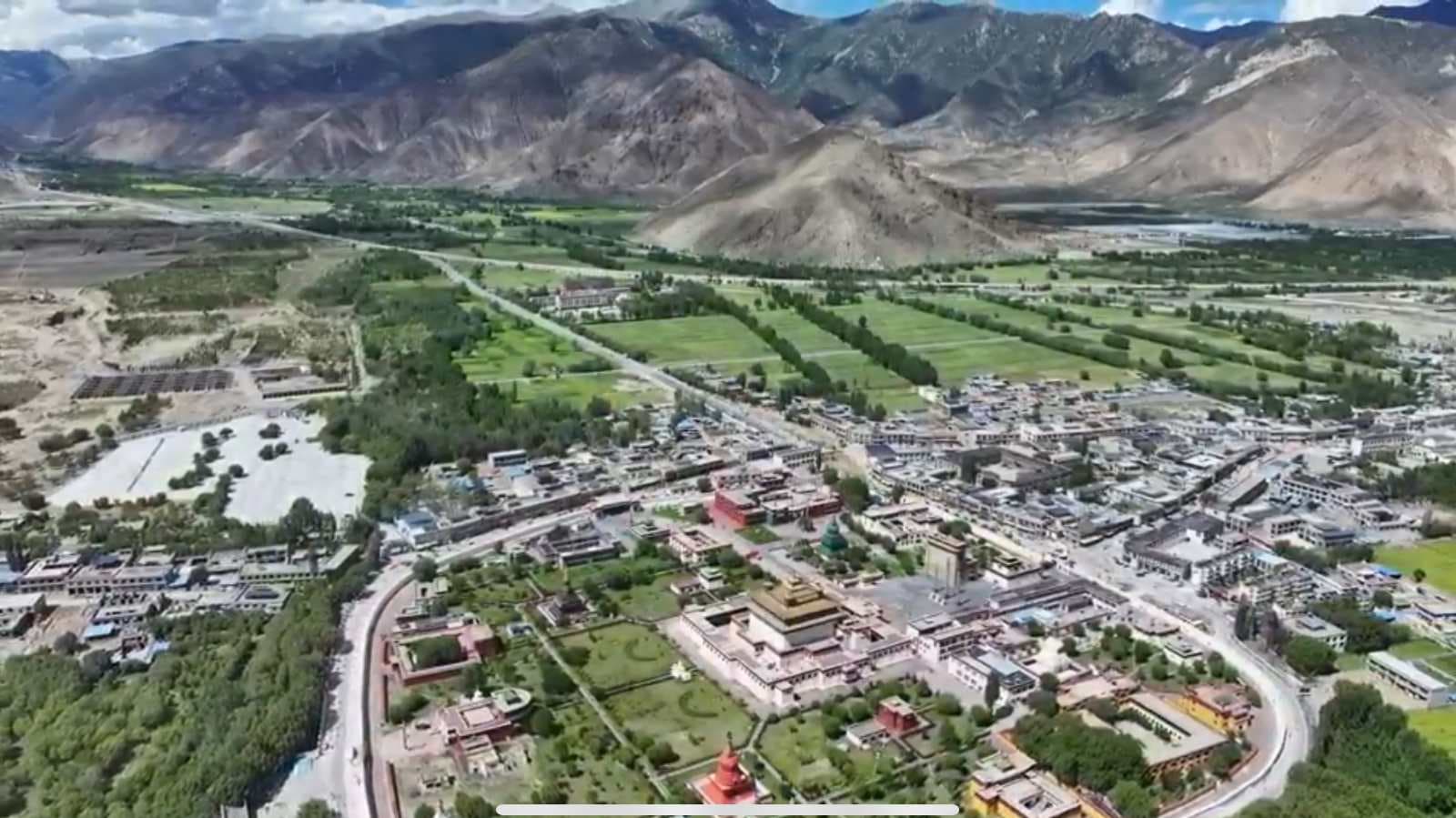
The Samye Monastery's full name is 'Paizar Samye Mingyu Lhungi Drubtse Tsuglhakhang', meaning 'The Unchanging and Spontaneously Accomplished Temple of Inconceivable Contemplation on the Auspicious Red Rock'. In the 7th century CE, when the Tibetan Tsenpo Songtsen Gampo married princesses from Nepal and the Tang dynasty - Princess Bhrikuti and Princess Wencheng - Buddhism was introduced to Tibet. Although the Jokhang and Ramoche temples were built then, they primarily served as royal shrines for Buddhist statues or lodging for travelling monks, without resident monastics.
By the late 8th century, Tibet had reached its zenith. The reigning Tsenpo, Trisong Detsen, was a devout Buddhist who invited two great Indian Buddhist masters, Śāntarakṣita and Padmasambhava, to spread Buddhism in Tibet. He decided to build a monastery for them. After Padmasambhava and others surveyed potential sites, they chose a location on the north bank of the Yarlung Tsangpo River near the Tibetan winter palace. Śāntarakṣita designed the construction plans. According to historical records, Trisong Detsen personally laid the foundation stone in 762 CE. Under Padmasambhava's supervision, construction took twelve years, completing in 775 CE. Legend says that when Trisong Detsen was eager to see how it would look when finished, Padmasambhava manifested an illusion of the monastery in his palm. Upon seeing it, Trisong Detsen exclaimed "Samye" (meaning "unexpected" or "unimaginable"), which became the monastery's name.
After Samye Monastery's completion, a grand consecration ceremony was held. Trisong Detsen invited monks from the Tang Empire, India, and Khotan to reside there, translate scriptures, and teach. He declared Buddhism as the state religion throughout Tibet. Additionally, he personally selected seven noble youths to be ordained as monks, becoming Samye Monastery's first lamas and Tibet's first ordained monks, historically known as the "Seven Examined Men" (sad-mi mi-bdun). Thus, Samye became Tibet's first proper monastery possessing all three jewels of Buddhism - Buddha, Dharma, and Sangha - holding an esteemed position in Tibetan Buddhism.
By the mid-9th century, Buddhism was prohibited in Tibet, and Samye Monastery was closed. When it reopened in the late 10th century, it became a central monastery of the Nyingma (Red Hat) school. During the Sakya period, the monastery was renovated and staffed with monks, leading to both Nyingma and Sakya schools coexisting there.
Monastery Layout Samye Monastery was modelled after Odantapuri Monastery (o-tanta-pu-ri, the Flying Temple) of the Pala Dynasty in Magadha, India. Despite multiple reconstructions due to fires, it has maintained its original layout. Most current buildings were rebuilt during the Seventh Dalai Lama's time, covering about 110,000 square metres. The monastery's oval ground plan follows Buddhist cosmology, creating an impressive and magnificent complex.
The Utse Grand Temple, Samye's central building, symbolises Mount Meru, the universe's centre and Buddha's dwelling place. Flanking it north and south are the Myul Pung and Myul Po temples, representing the sun and moon. Four main temples in the cardinal directions represent the four continents, each with two subsidiary temples symbolising the eight subcontinents. Four distinctive stupas of different colours - red, green, black, and white - at the main temple's corners represent the Four Heavenly Kings. A circular wall encompasses these buildings, symbolising the Iron Mountain Range that borders the world.
The Utse Grand Temple

The Utse Grand Temple (Uzi Rinsong Lhakhang), also called Dorje De Temple, is the monastery's most impressive structure, covering about 8,900 square metres. Facing east, it appears five-storied externally but has three actual floors, each 5.5 to 6 metres high. The ground floor features Tibetan architecture, the middle floor Chinese style, and the top floor Indian design, built by craftsmen from these three regions, earning it the nickname "Three-Style Temple".
A corridor surrounds the main temple, with three main gates facing east, south, and north. The eastern gate features a dharma pillar on top, with large 'fresh cloth' hangings below the eaves. The walls beside the gate are decorated with auspicious relief carvings called 'Tashi Tagye'. The gate connects to side corridors with double-row pillars, and the corridor walls are covered in exquisite murals.
The ground floor is divided into two sections: a scripture hall in front and a Buddha hall behind. The scripture hall spans seven bays wide and four deep, with statues of Tibet's Buddhist pioneers, the "Seven Examined Men", standing on either side. The Buddha hall features thousand-Buddha murals on all walls and houses a 3.9-metre-high stone statue of Shakyamuni Buddha, said to have existed since the temple's founding. Five Bodhisattva statues and one Dharma protector statue flank each side, added in recent years.
The middle floor contains a Buddha hall and the Dalai Lama's chambers, built in Chinese temple style. Its corridors feature famous "Tibetan History" murals, depicting events from the mythical union of an ogress and monkey that birthed the Tibetan people through to the Ninth Dalai Lama's reign. The hall currently houses statues of Guru Padmasambhava, Shakyamuni Buddha, and Amitabha Buddha in bronze.
The top floor features double rows of swastika-patterned pillars, with Vairocana Buddha in the centre, surrounded by Eight Great Bodhisattvas and numerous Yab-Yum Buddha statues, all crafted in Indian style. The roof is vajra-throne style, with a triple-eaved spire in the centre and single-eaved spires at the four corners, also following Indian design.

In front of the Utse Temple's east gate stood a nine-storey Buddha Exhibition Hall, used to display giant embroidered thangkas of Shakyamuni Buddha during the annual Buddha Exhibition Festival. During the Cultural Revolution, the upper six floors were destroyed, leaving only three floors standing.
South of the east gate stands an unadorned rectangular stone pillar from Trisong Detsen's time. This famous "Samye Buddhist Establishment Pledge Pillar" bears ancient Tibetan inscriptions recording Trisong Detsen's vows to support Samye Monastery in 779 CE. The temple corridor also houses Tibet's first bronze bell, cast by Trisong Detsen's queen and Prince Muné Tsenpo, with Tibetan inscriptions praising Trisong Detsen's promotion of Buddhism.

The Utse Grand Temple is surrounded by temples symbolising the four continents. The Jangpai Lhakhang in the east enshrines Manjushri Bodhisattva. The Changpa Lhakhang in the west houses Maitreya Buddha. The Ayapa Tsinling in the south contains Amitabha Buddha. The Sangye Lhakhang in the north, which originally housed a bronze Shakyamuni Buddha, now contains thousand Buddha statues with murals primarily depicting Buddha mothers teaching dharma.
Four stupas - red, green, black, and white - stand at the corners of the Utse Temple, representing the Four Heavenly Kings. The black stupa is built of layered bricks in a triple-cauldron style. The green stupa, constructed with green glazed bricks, has three tiers with shrine rooms on all four sides of the lower two levels and a vase-shaped top. The white stupa has a square body that tapers in steps, with 108 small stupas on the square enclosure around its base. The red stupa has a lustrous terracotta colour and appears square but is actually round, resembling an inverted bell.
The monastery's wall extends 1,008 metres with a height of 4 metres. Every metre features a red clay stupa, totalling 1,008 stupas. The wall has four main gates, with the east gate serving as the main entrance. The monastery complex also includes Queen Trisong's palace Chum Lhatsong (Three Queens' Palace), scripture rooms, translation halls, storehouses, and monks' quarters. Beyond the main wall lies a mani corridor wall with circumambulation paths between the walls.
☸️ Tri Ralpachen [Tri Ralpachen, meaning 'the Braided King'] earned his name from tying ceremonial scarves to his braids to honour monks. Tri Ralpachen (Tibetan: ཁྲི་གཙུག་ལྡེ་བརྩན།, Wylie: Khri-gtsug-lde-brtsan, 802-838 CE), also known as Tri Tsuk Detsen, was Tibet's ruler from 815 to 836 CE. Chinese sources such as "Cefu Yuangui" and "New Tang History" refer to him as Keli Kezhu, while "Zizhi Tongjian" calls him Yitai Tsenpo. He was the son of Tride Songtsen and Queen Dro Za Lhagyal Mangmo Je, and the full brother of Lang Darma. He was also known as Ralpacan.
Tri Ralpachen ascended to the throne in 816 (or 817) CE after his father Tride Songtsen's death. Since Prince Tsangma, whom the ministers favoured, had already become a monk, Tri Ralpachen took the throne.
He was deeply devoted to Buddhism. During his reign, he vigorously promoted Buddhism in Tibet. In 831 CE, he commissioned craftsmen from Khotan and Nepal at great expense to build the magnificent nine-storied Ushang Dorje Peme Tashi Gepel Temple. Under his patronage, royal consorts, princes, nobles, and ministers all followed suit, leading to a proliferation of Buddhist temples and a significant increase in monks and nuns throughout Tibet. He also recruited many foreign Buddhist masters to translate scriptures and improved the Tibetan alphabet.
Politically, he elevated Buddhist clergy to the highest status, appointing the high monk Pelgyi Yönten as his chief minister. He decreed that every monk in Tibet should be supported by seven households of commoners, establishing the "Seven Households per Monk System". Tri Ralpachen himself showed extreme reverence to monks. He would braid his hair into two plaits, tie silk scarves to the ends, and spread these scarves on two elaborate cushions for two high monks to sit upon, known as the "Two Supreme Ones" (a yoga tantric master and an ordained monk). This earned him the nickname "Ralpacan" (meaning "the one with braids"). Tibetan Buddhists regard him as an incarnation of Vajrapani. Later Tibetan historical texts praise his virtues, claiming that during his reign, people lived in peace and prosperity, and Tibet became like a paradise on earth. However, Chinese sources like the "New Tang History" describe him as a weak and sickly ruler who let power fall into the hands of Bön ministers.
☸️ Lang Darma (Tibetan: གླང་དར་མ།, Wylie: Glang dar ma, 799-842 CE), originally named Darma Üdumtsen, was the last emperor of the Tibetan Empire, ruling from 838 to 842 CE. Chinese historical records refer to him as Darmo. He was Tride Songtsen's second son. According to the Tibetan text "Scholar's Feast", he inherited the throne after his elder brother Tsangma had become a monk.
The "New Tang History" describes Lang Darma as a debauched ruler who loved hunting, drinking, and women, and was extremely cruel. The minister Wei Jiatorui, seeking to weaken the clergy's influence, encouraged Lang Darma to suppress Buddhism. When Tibet experienced natural disasters like frost, hail, and plagues, Lang Darma proclaimed in 840 CE that these calamities were caused by angering the gods through Buddhist practices. He banned Buddhism and forcefully promoted Bön religion, an event known as "Lang Darma's Suppression of Buddhism".
Numerous Buddhist temples and statues were destroyed under Lang Darma's rule. Sacred texts were either thrown into water and fire or buried underground. Foreign translators were expelled. Buddhist clergy faced various fates: some were killed, others became nobles' slaves, some were forced to become executioners, and others were exiled to frontier military service. Although Buddhism suffered severely, it remained influential. Lang Darma's suppression faced strong opposition from monks and Buddhist followers. According to the "Red Annals - External Chapter", even his beloved daughter Sangza Darma conspired with high monks from Zhaye Lhunpo Monastery to assassinate him. To stop the persecution, Lhalung Palgyi Dorje, one of Padmasambhava's twenty-five disciples, killed Lang Darma at the monks' encouragement, ending the suppression. Buddhism subsequently flourished in Tibet's border regions and eastern areas.
☸️ The First Buddhist Suppression
Around 739 CE, smallpox spread throughout Tibet, and Princess Jincheng, who actively promoted Buddhism, died from the disease. Some nobles seized this opportunity to spread rumours that these misfortunes were caused by Buddhists offending Bön deities. Subsequently, monks were expelled, initiating conflicts between the two religions.
Around 755 CE, when young Trisong Detsen ascended the throne, anti-Buddhist ministers like Mashang Zhongba Jie and Daza Lugong took control of the government and ordered Buddhism's prohibition. Buddhism faced the following persecutions:
- Buddhist practice was forbidden, with violators facing property confiscation and exile. Buddhist funeral rites were prohibited.
☸️ The Second Buddhist Suppression
Around 838 CE, Darma took power. Originally a Bön follower, he actively supported Bön and oppressed Buddhism to consolidate his rule. When agricultural and pastoral areas experienced successive epidemics, frost, hail, drought, and floods, Bön practitioners blamed these disasters on Buddhist practice. In 841 CE, Darma ordered Buddhism's suppression:
Buddhist monasteries were closed or destroyed. The Jokhang and Samye temples were sealed, with their walls painted with images of monks drinking and revelling to show their supposed corruption. The Ramoche Temple was converted into a cattle pen. Buddhist statues were buried, and immovable ones were bound with ropes as a form of humiliation. Buddhism was banned throughout Tibet's Four Wings. The ancient Tibetan Four Divisions, called Ruzhi in Tibetan (meaning "Four Wings"), comprised U-ru, Yo-ru, Ye-ru, and Ru-lag. U-ru and Yo-ru were called Ü and later became Inner Tibet; Ye-ru and Ru-lag were called Tsang and later became Outer Tibet. Together they were known as Ü-Tsang. The Four Wings region extended east to Kongpo, northwest to Ngari, and north to the Nyenchen Tanglha and Gangdise Mountains. After Tibet unified the Qinghai-Tibet Plateau, Sumpa-ru was established in northern Tibet, creating the "Five Ru System". These events are detailed in "The Five Categories of Padmasambhava's Teachings".